7 things every parent of a newborn needs to know
Want to be prepared for newborn sleep? SPOILER ALERT: It’s a shit show. Let’s take a trip down memory lane. Otto (my first baby) was NOT an easy baby. I think I got one photo of him laying in his bassinet at the beginning- and I’m not kidding- that was the first and only time he ever did this and it was right when we got home from the hospital! Yeah, it was hard.

I was so lucky to have my mom stay with us for that first week. But then she had to leave. And my husband had to go back to work. And I was all alone wondering what had just happened to my life. I had never been so tired or lonely. I would literally count down the minutes until my husband came home, tracking his location on my phone. I googled everything about “why won’t my baby sleep” and began obsessing over his wake windows, feedings, wake ups, and naps. I had journals where I was documenting EVERYTHING. Otto’s sleep (and mine) were causing me so much stress and anxiety. Nothing we were trying seemed to work. Then, when I would let him contact nap (because nothing else was working) I would feel like a complete failure.
Luckily, by the time Noe (my second baby) came around, I knew better. I tuned it all out. I learned about normal sleep. And even though it was still hard, I enjoyed her SO much. Looking back, there are so many things I wish I knew were normal about newborn sleep when I was a first time mom that would have helped me enjoy Otto’s newborn phase A LOT more. Below are some things about newborn sleep that are completely normal!
-
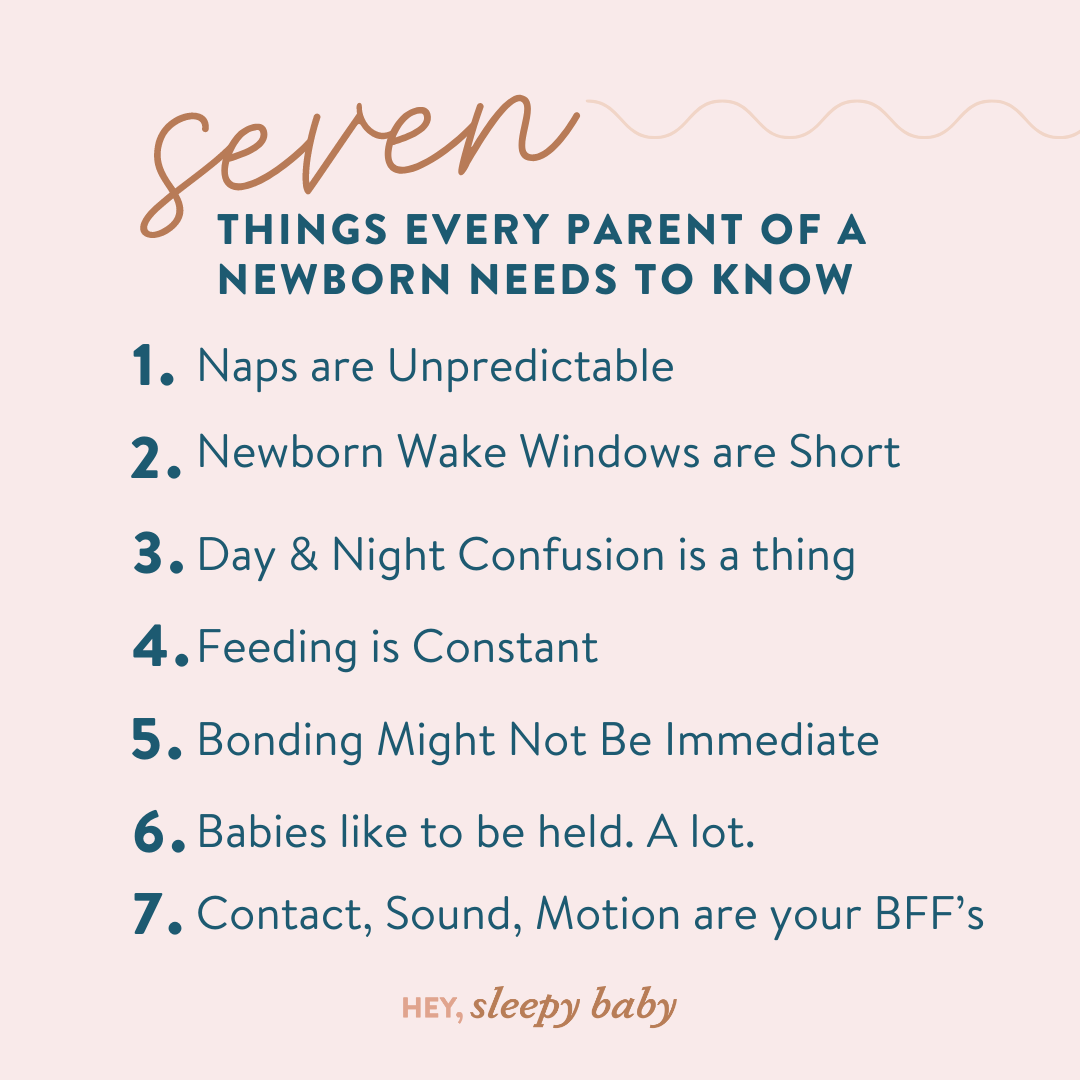
Naps are Unpredictable– Don’t expect to be on a schedule for the first several weeks. Your baby will nap without much of pattern until three months or so (at least!).
-
For 0-3 months old, you can expect your baby to need about 14-17 hours of total sleep in a 24 hour period.
-
By 3 months, you may see a pattern of 4-5 naps per day depending on length, which will vary from 20 min to a couple of hours. Still totally normal for you not to have a “schedule” yet!
-
-
Newborn Wake Windows can be Short– The newborn wake windows (time baby spends awake between sleeps) are SO short for many babies! They can be awake for as little as 30-60 min at a time in the first few weeks, then 60-90 minutes by a month or two. This is basically just enough time for a feeding and diaper change- who knew!? That being said- it’s ALSO common for babies to stay awake much longer than this. Sometimes newborns will sleep great overnight but rarely nap for very long during the day. Pay attention to cues and baby’s mood. If they’re eating well and seem content while awake, let it go!
-
Day & Night Confusion is a thing– Newborns have no sense of day & night yet, so they may take long naps during the day and be up frequently at night. Around 12 weeks old, circadian rhythm sets in and they may begin to differentiate between day and night a bit better. TIP: getting out in sunlight and keeping naps under 2 hours can help this along and get you your longest stretches overnight!
-
Feeding feels Constant– Your baby will likely be up every 2-3 hours to feed in the first few weeks, with closer together “cluster feeds” in the evening hours. It’s important to feed on demand, both for baby and for your milk supply. If you are concerned that your baby is ALWAYS feeding and never seeming satisfied, get in touch with an IBCLC right away.
-
Bonding Might Not Be Immediate– We all think we’ll have this magical and instant bond when we first have our baby. This isn’t always the case! Sometimes it can take several days, weeks or even months to feel truly connected and “in love” with your baby- and that’s ok. Be compassionate with yourself- you’ll get there! AND if you’re having a hard time feeling connected to your baby plus having feelings of sadness, anxiousness, anger, or overwhelm- you’re not alone. Check in with your healthcare provider to speak with them about your mental health.
-
Babies like to be held. A lot– Babies attach through their senses. It’s normal for a baby to only sleep while being held or nursing!
-
Skin to skin should be done as much as possible day or night. This can be done with you or your partner! Skin to skin releases oxytocin for both of you, aka “the love hormone”. Skin to skin allows many babies to fall asleep easily and achieve deep and quiet sleep which accelerates brain patterning.
-
Co-bathing & Baby–wearing: These are two other options similar to skin to skin that keep your baby close and can be done by you or your partner to promote bonding. Co-bathing and baby-wearing allow both you and your baby to experience lowered stress.
-
Gazing– gazing into your baby’s eyes (instead of at your phone!) during feedings can also be a beautiful way to bond.
-
-
Contact, Sound, Motion are your BFF’s– Babies may often need one or all three of these things to get to sleep (ex: holding, rocking, white noise, singing, bouncing, etc.). Don’t expect to be able to just put your baby down and walk away for them to fall asleep- it might not be that easy, and it doesn’t mean you’re doing ANYTHING wrong.
The reality is, even knowing all of this, you will likely still be dealing with sleep deprivation during this newborn stage. Here are some ways that can help you deal with that….
-
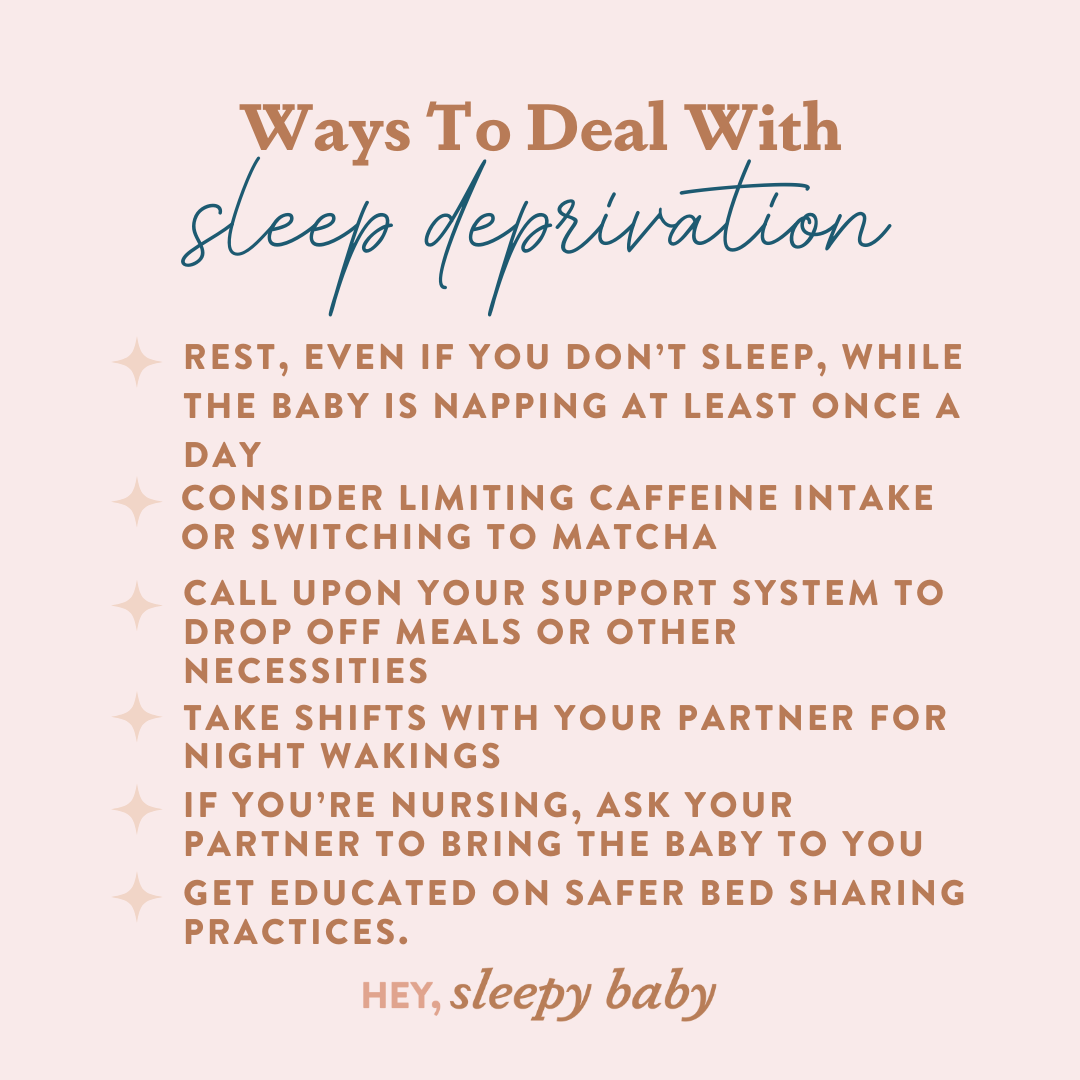
Rest- I encourage you to rest, even if you don’t sleep, while the baby is napping AT LEAST once a day.
-
Consider limiting caffeine intake, and opt for high protein foods to stay full vs. sugar and carbs only.
-
Call upon your support system to drop off meals or other necessities- seriously- say YES when they offer! Budget for things like meal prep services, takeout, house cleaning, postpartum doula hours, etc. if you can
-
Take shifts with your partner for night wake if you’re pumping or bottle feeding. If you can protect a 3-4 hour stretch for yourself at least a couple of times per week it can be life changing. Check out this post for more about how to implement “shift work” with your partner!
-
If you’re nursing, ask your partner to bring the baby to you to feed and do the diaper changes/ soothing for night wakings. This way you can rest in bed and not fully “wake up” every single time the baby feeds.
-
Get educated on safer bed sharing practices. The majority of parents will end up bringing their baby to bed at least once, even if unplanned. Knowing the safety guidelines is key! Click here for more info on safe sleep.
One of the biggest predictors for secure attachment is our delight and enjoyment in our child simply for their existence. This is why I always say it is so much more important to enjoy your baby than it is to stress about their sleep. Engage with your baby during play time, soak in their adorable little features, movements, and noises, and talk with them. If this feels hard, you know the saying, fake it til ya make it!
Of course there are a lot of reasons that would make this difficult, including PPA/PPD. If that’s the case for you, it’s not your fault and you are not alone, there is help available for you. I recommend reaching out to Postpartum Support International to get help and find local resources if this is something you are experiencing.
Being prepared for normal newborn sleep means understanding that there is not a one size fits all approach to your baby is KEY to thriving in the fourth trimester. I remember worrying that it would be like this forever. I wondered if I would ever sleep again. I wondered if my baby was normal. I’m here to say, yes it is hard, AND it will get better. Go easy on yourself.
Some baby sleep issues are red flags worth investigating. Download my FREE advocacy guide and learn how to spot possible medical red flags, track symptoms, and talk to your child’s healthcare provider with clarity and confidence.
If you’re looking for all the information you’ll need from the newborn stage through toddlerhood, check out the Newborn Masterclass which is the Essential Baby Sleep Course for New + Expecting Parents OR grab the Baby Bundle to set yourself up for the newborn phase. With this option you’ll get all the great stuff in the Newborn Masterclass PLUS The Ultimate Crib & Bed Guide.
FAQs: 7 Things Every Parent of a Newborn Needs to Know
Welcoming a newborn comes with lots of questions and uncertainties — especially in the early weeks. These FAQs address some of the most common concerns parents have about newborn care, sleep, feeding, calming, and expectations.
How much sleep do newborns really need?
Newborns often sleep between **14 and 17 hours** per day, but it’s broken up into short stretches of usually 45–90 minutes. Their sleep is spread across daytime and nighttime, and patterns fluctuate as they grow.
Why do newborns wake so frequently at night?
Newborns have tiny stomachs and need frequent feeds, so waking every **2–3 hours** is typical. Their sleep cycles are short, and they often wake fully between cycles, especially in the first few months.
How can I tell if my newborn is getting enough milk?
Good signs include frequent wet diapers (about **6–8+ per day**), regular bowel movements, steady weight gain, and periods of calm alertness between feeds. If you’re concerned, your pediatrician or lactation consultant can help assess feeding.
What’s a good way to soothe a fussy newborn?
Many babies respond well to gentle cues like swaddling, white noise, swaying, skin‑to‑skin contact, pacifiers, or rhythmic shushing. Every baby is different, so pay attention to what calm signals work best for your newborn.
Is it normal for newborn sleep and feeding patterns to be unpredictable?
Yes — early newborn schedules are often irregular. This is normal and reflects biological needs rather than behavior. Patterns usually begin to consolidate closer toward **8–12 weeks**, though every baby is unique.
How do I tell when my newborn is sleepy and ready for sleep?
Sleepy cues include yawning, eye rubbing, zoning out, fussiness, or losing interest in interaction. Catching these cues early helps avoid overtiredness, which can make it harder for babies to settle.
When should I seek help from a pediatrician?
Talk to your pediatrician if your newborn has difficulty feeding, poor weight gain, signs of illness (fever, breathing issues), persistent crying that feels abnormal, or if you’re feeling overwhelmed and need guidance. Your clinician can help assess and reassure you.
Other Blog Posts to Check Out:
It’s OK if You Don’t Love the Newborn Stage
Is Drowsy but Awake Necessary?
My 20 Must- Have Products for Newborns
The 4-Month Sleep “Regression”
Podcast Recs:
Anxiety is not “Normal” with Therapist Kate Borsato
The Truth About Baby Sleep with Rachael Shepard-Ohta, founder of HSB
Was this helpful? Save it for later!
binge reads
We think you'll love these



Hey, I’m Rachael — and I want to show you an way to get your babies and bigger kids to
I started Hey, Sleepy Baby for parents who want their nights back... without forceful sleep training or guilt. I’ve already done the research (trust me), diving deep into infant sleep biology, attachment, and conscious parenting.
With a Master's in Education, certifications in infant-parent mental health, and extensive training in responsive sleep strategies, I help parents untangle what really matters: gentle, real-life methods that honor your baby's cues and your sanity.
When I'm not writing or coaching, I'm chasing little humans, over-analyzing coffee strength, or reminding myself that tomorrow is a fresh start. I'm rooted in research but here for real life.


easier
sleep well.
MEET YOUR SLEEP CONSULTANT
You deserve to the
baby stage, not just "survive it."
And you DON'T have to sacrifice your values, ignore your instincts, or force yourself to follow a method you don't align with just to get your baby back to sleep.
I’m here to help you create a restful, sustainable sleep environment that honors both your baby’s needs AND your own (without the stress OR the guilt!) because, no, you don’t have to choose between the two.
enjoy!
Wish you could help your baby sleep better without resorting to sleep training? Download my FREE guide to a good night’s sleep and learn 8 simple, science-backed tips for supporting your child’s needs.
Traditional sleep training methods don’t have to be your solution to better sleep.


SLEEP TRAINING ISN’T THE ONLY WAY TO GET GOOD SLEEP