newborn baby sleep – here’s what you need to know
Newborns. My favorite. There’s nothing quite like a brand new, squishy little newborn to snuggle with. There are actually a lot of people that don’t enjoy the newborn stage (normal and totally OK) but I really really love it. There’s something inexplicable about the bliss of the newborn bubble to me- it’s delicious, intoxicating and slightly addicting. That doesn’t mean it’s not without it’s own unique stressors though- namely sleep!
From the moment you announce you are pregnant people begin talking to you about baby sleep! As a society, we are totally fixated on the subject. Everyone has opinions, experiences, and advice, which feels completely overwhelming. We’ve all heard the warnings like ‘Be prepared to never sleep again’ but is this really something to worry SO much about before baby even gets here? Do we really need to stress so much in the newborn period about “setting up good sleep habits” early on? This blog is here to drown out the noise and answer those late-night Google questions about newborn sleep, newborn sleep regressions, and how to get the best sleep possible from the start.
From personal experience, newborn sleep can feel like a minefield. You might feel like you are constantly failing, but the truth is that it really is just that hard sometimes. With my first baby, I spent so many nights up googling everything imaginable- feeling like a failure and spiraling with anxiety. By the time my second came around, I had learned SO much about normal infant sleep that I was able to relax and roll with the bumps that inevitably come when navigating newborn sleep! This blog is a quick synopsis of life and sleep with a newborn baby. A much more comprehensive guide with more detailed explanations can be found here in my brand-new All About Your Newborn Guide and it’s completely free!
newborn babies 101: the essential things I want parents to know
-
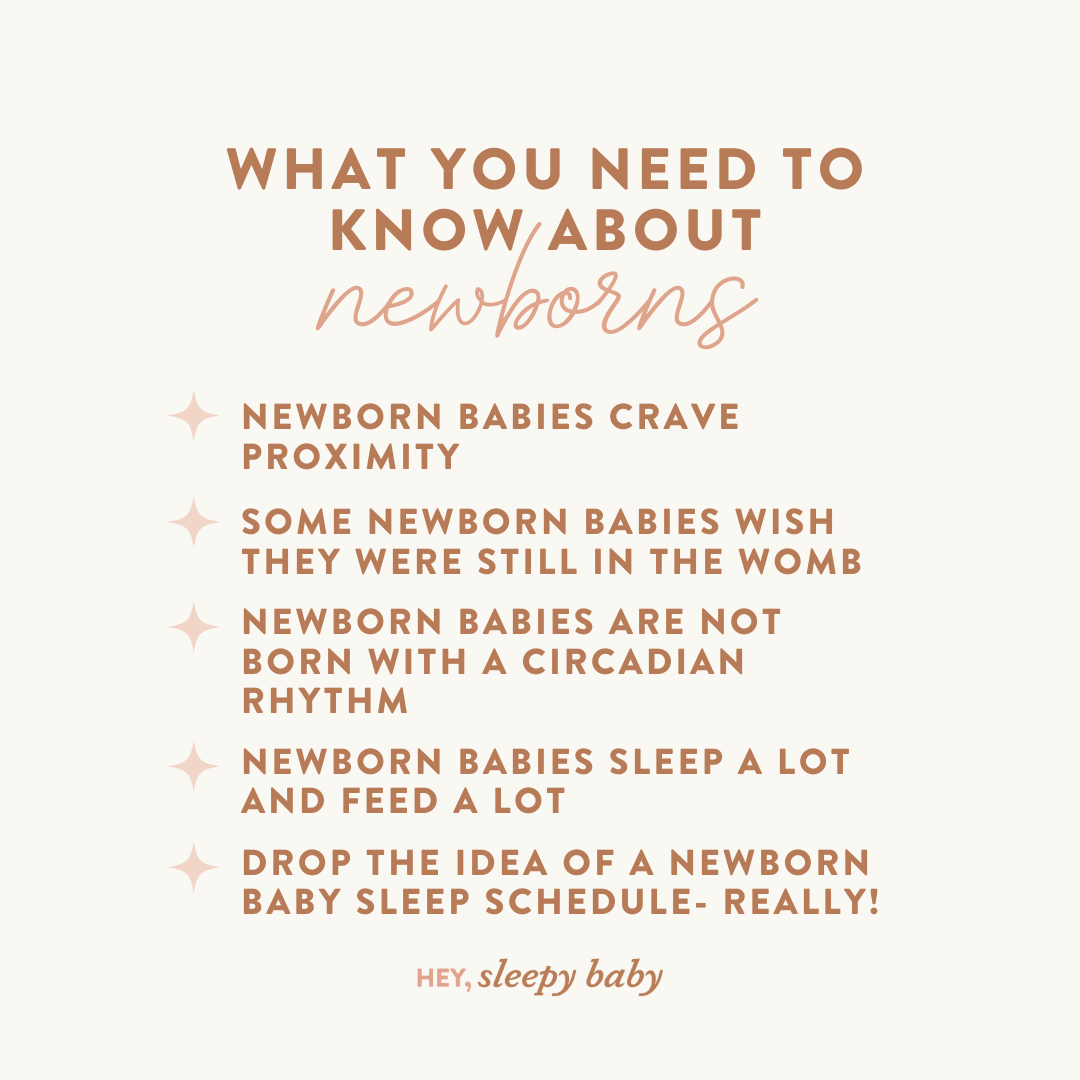
Newborn babies crave proximity. They love nothing more than being held – A LOT! In Western society, we seem obsessed with the idea of having space between the caregiver and the baby. Yet, humans are ‘carry’ mammals. Carry mammals birth the most immature infants who are completely dependent on their caregivers for food, warmth, and safety. Think kangaroos – joeys crawl into a pouch and either sleep in the warmth and safety of mum’s body or they feed. This is pretty much what all human babies crave. Keeping this picture in mind helps to set realistic expectations of what to expect from your newborn baby, despite the pressure from others to put them down. Babywearing, skin-to-skin contact, and eye gazing are great ways to fulfill this need and help stimulate deep and quiet sleep. Is it any wonder then that sleep support aids that facilitate a distance between caregiver and baby seem to cause headaches with baby sleep? Many babies dislike sleeping in the crib or bassinet overnight and prefer to sleep with their caregiver. If bedsharing is something you would like to consider please read up on the “Safe Sleep Seven” guidelines to minimize any potential risks.
-
Just like the uniqueness of adult needs and wishes, every baby has unique preferences. Some newborn babies seem to come out wishing they were still in the womb and love nothing more than closeness with you. I call these barnacle babies! Some babies love to cuddle but like to sleep with the freedom to move. Other babies will indicate to you that they are tired by rubbing their eyes, having red eyebrows, and nestling their caregiver’s body. Tuning into these personal cues, quirks and preferences is the key to a calm and peaceful relationship with your baby’s sleep. My free newborn sleep guide will go into detail with lots of examples of signs to look out for and how to tune into your baby’s signals and cues. These are just little common signs to look out for that guide you as to how best to meet your baby’s sleep needs.
-
Newborn babies are not born with a circadian rhythm, which is one of the hardest parts of newborn life. You may have heard of how newborns have “days and nights mixed up” and this actually DOES happen. With no circadian rhythm comes lots of day and night confusion. It is not uncommon for babies to take long restful naps during the day and be awake a lot during the night. This is normally the time when people begin googling ‘newborn sleep deprivation.’ But I promise this pattern does ease after the first several weeks. For most babies, the body clock begins to mature somewhere between 8-12 weeks and they begin to develop their circadian rhythm. Getting out in the sunshine during the day and keeping nights calm and dim can help stimulate the development of a day and night pattern. Although babies will still wake at night it is usually for shorter periods, consisting of feeding and changing, rather than whole wake windows! You can even dream feed to help try and reduce the length of night wake. Read more about my personal experience with newborn sleep, sleep deprivation, and ways to cope here.
-
Newborn babies sleep a lot and feed a lot. You may feel like you do nothing but eat, sleep, repeat. Their wake windows (time they spend awake between naps) can be as little as 40-60 minutes (maybe even shorter in the first few weeks) then 60-90 minutes as they reach 1-2 months. However this is not a hard and fast rule, and there are some newborns that are more alert and will stay awake for longer periods of time without napping, which isn’t necessarily something to worry about. For babies who will only sleep on your body, there is a lot of time spent holding, soothing, and nursing your newborn. My advice, instead of working yourself up and getting anxious about getting them to sleep on their own, lean into their need for closeness and contact nap or babywear. This allows you to rest as well, and is definitely the path of least resistance in the early weeks.
-
Most newborn babies need support to sleep, but some don’t- YET. Whether this is motion, sound, proximity, or a combination of all three. Do not expect to be able to put your baby down and them fall asleep independently or “drowsy but awake!” This idea caused me so much unnecessary stress and feelings of inadequacy as a first-time mom and it is simply not a realistic expectation for many. Keep in mind, though, that some newborns are pretty chill to be put down anywhere and could sleep through a parade- but it may not last. Newborns often have a stimulus barrier that allows them to sleep through anything and it’s actually a struggle to wake them up. Parents often think they’ve hit the jackpot. Then, after the first several weeks or couple of months, things start to change. Baby is a little more awake and alert and this stimulus barrier is thin- they now startle awake more easily, take short naps, need lots of support to sleep, or refuse their bassinet. This is all super common!
-
Drop the idea of a newborn baby sleep schedule- really! Relieve yourself of the stress and don’t even think about looking up “newborn sleep schedules.” Thousands of results will come up for newborn sleep schedules and newborn sleep times. It will leave you with a schedule that is completely impossible to keep because babies are so unique and sleep needs vary widely in the first year. Instead of schedules, you can start routines like a morning walk, singing the same songs during bath time, or soothing your baby in the same way each time you are supporting them to sleep so that they begin to build strong sleep associations and over time develop a sleep “routine.”
Some baby sleep issues are red flags worth investigating. Download my FREE advocacy guide and learn how to spot possible medical red flags, track symptoms, and talk to your child’s healthcare provider with clarity and confidence.
If you’re looking for all the information you’ll need from the newborn stage through toddlerhood, check out the Newborn Masterclass which is the Essential Baby Sleep Course for New + Expecting Parents OR grab the Baby Bundle to set yourself up for the newborn phase. With this option you’ll get all the great stuff in the Newborn Masterclass PLUS The Ultimate Crib & Bed Guide.
FAQs: Newborn Babies — What You Need to Know
Welcoming a newborn is joyful and overwhelming in equal measure. These frequently asked questions reflect the most common concerns parents have about newborn basics — sleep, feeding, soothing, schedules, and what’s developmentally typical in those early weeks.
How much sleep do newborn babies really need?
Newborns typically sleep **14–17 hours a day**, but they do it in short bursts — often 45–90 minutes at a time. Their sleep is spread across day and night, and patterns evolve over the first few months.
Is it normal for newborns to wake up every few hours?
Yes — it’s completely normal. Newborn stomachs are tiny, so frequent waking to eat (every 2–4 hours) is typical. Sleep cycles are short, and many babies wake briefly between cycles.
How much should a newborn eat?
Feeding frequency varies, but most newborns feed every **2–3 hours** (8–12 times per 24 hours), whether breastfed or formula‑fed. What matters most is consistent wet/dirty diapers, steady weight gain, and alert, content behavior between feeds.
What’s the difference between sleepy cues and overtiredness?
Sleepy cues include yawning, eye rubs, and glazed looks. If a baby stays awake too long past those cues, they can become overtired — which can paradoxically make it *harder* for them to settle and sleep well.
Is it okay to let my newborn “cry it out”?
No. In the newborn period, crying is how babies communicate needs. Responsive soothing builds trust and supports regulation — and given newborns’ limited ability to self‑soothe, “cry it out” approaches are not recommended during these early weeks.
Why does my newborn sleep best while being held?
Newborns seek the security of warmth, motion, and your heartbeat because that’s what they’re used to from the womb. Holding, skin‑to‑skin contact, or gentle swaying provides comfort and helps regulate breathing, temperature, and stress levels.
How can I tell if my newborn is getting enough milk?
Good signs include frequent wet diapers (6–8+ per day), regular bowel movements, gradual weight gain according to your pediatrician’s guidance, and periods of calm alertness between feeds. If you’re ever unsure, your pediatrician or lactation consultant can help.
When will my newborn start to sleep for longer stretches?
Every baby is different, but many begin to stretch sleep longer at night between **8–12 weeks** or when they’re around **12–14 pounds**. Prior to that, frequent night waking is typical and normal.
Was this helpful? Save it for later!
binge reads
We think you'll love these


You deserve to the
baby stage, not just "survive it."
And you DON'T have to sacrifice your values, ignore your instincts, or force yourself to follow a method you don't align with just to get your baby back to sleep.
I’m here to help you create a restful, sustainable sleep environment that honors both your baby’s needs AND your own (without the stress OR the guilt!) because, no, you don’t have to choose between the two.
enjoy!
BABY SLEEP COURSES →
BABY SLEEP CONSULTS →
Wish you could help your baby sleep better without resorting to sleep training? Download my FREE guide to a good night’s sleep and learn 8 simple, science-backed tips for supporting your child’s needs.
Traditional sleep training methods don’t have to be your solution to better sleep.


SLEEP TRAINING ISN’T THE ONLY WAY TO GET GOOD SLEEP