Is it safe for a baby to sleep on their tummy? If so, when? This is a topic that can cause a lot of anxiety for new parents, so I’m here to clear some things up!
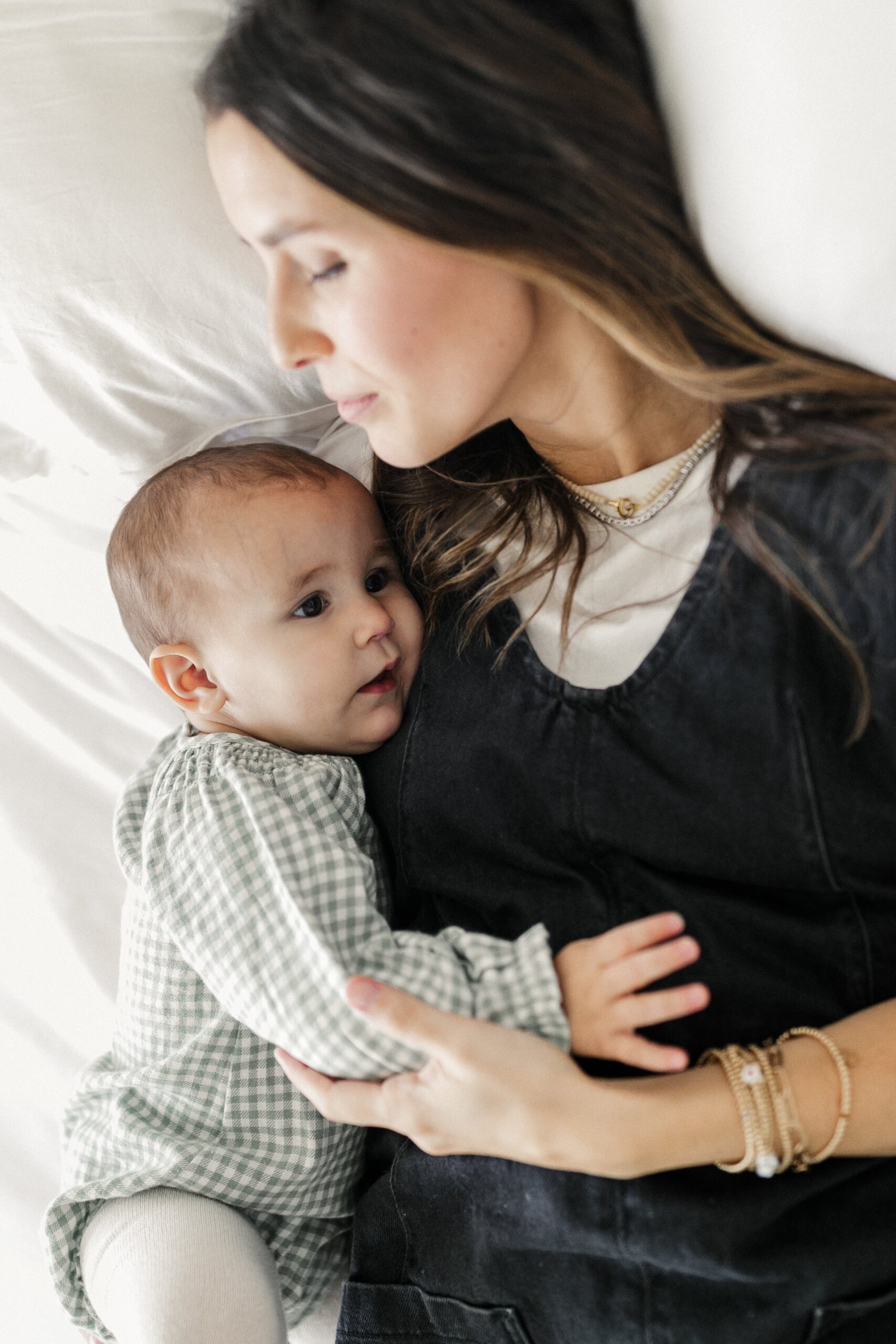
Lots of babies naturally sleep well on their front (think about how they love to sleep on your chest!) and will eventually become tummy sleepers. However, it’s important to keep in mind what we know about safest sleep set ups.
Young babies have heavy heads and weak necks. If they’re put down in the prone position (on tummy) when they’re too young, the risk for SIDS and suffocation is increased. The “back to sleep” campaign, which started around 30 years ago, has been associated with a massive decline in SIDS rates.
Is tummy sleep for babies ever safe?
Babies should be placed on their backs until 1 year whenever possible.
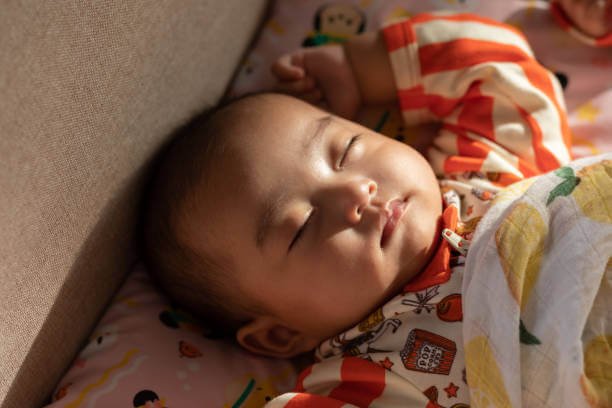
However, when they’re able to roll BOTH ways (back to front and front to back), it is OK to leave them on their tummy if they get there themselves. This is usually at a few months of age. Be sure the crib is completely free of blankets, bumpers, stuffed animals or other soft bedding. Your child should be sleeping in a crib with nothing but a tightly fitted sheet until at least 1 year old.
If bed sharing, babies should not be on their tummy for sleep as the suffocation and rebreathing risks may be higher on an adult mattress. See here for more on bed sharing more safely.
What if my baby hates being placed on their back for sleep?
Some babies really have a hard time getting comfortable on their backs. This is sometimes due to airway/ oral tie issues or reflux/ food intolerances and discomfort. This would be something to explore further with your healthcare team, especially if your baby shows symptoms like gasping or choking, pauses in breaths, open mouth breathing or snoring, belly discomfort, frequent constipation or excess gas. It’s still important to try and get them to stay asleep on their backs, especially under 6 months old when they are most vulnerable to SIDS.
A pacifier may clear more space for breathing around the nose and mouth or help prevent a baby from rolling over onto their stomach, a position known to increase the risk of SIDS. According to the National Sleep Foundation, “the protective effect of pacifiers is more pronounced when the baby is in an unsafe sleep environment, such as when they are sleeping on their stomach or their side, sharing their bed with an adult, or have soft bedding in their crib.”
A lot of parents I’ve worked with who have reflux babies worry that with the frequent spit up or vomiting, their baby may choke or aspirate if placed on their backs for sleep. This is a myth! From the AAP: “Though parents are often concerned that their baby may vomit and choke while sleeping on their back, it is a total myth! Babies automatically cough up or swallow fluid that they spit up or vomit because of the gag reflex, that naturally prevents choking from happening. There is no evidence that healthy babies placed on their backs are more likely to have serious or fatal choking episodes than those placed on their stomachs. But there is strong evidence that babies placed on their stomachs are at higher risk for sudden infant death syndrome (SIDS).”
What do I do if my baby gets “stuck” on their tummy?
It’s a common phase that can be really annoying: baby rolls to their belly but then gets stuck there and gets very upset until the parent helps them roll back. This may happen several times per night. It DOES pass.
Try to give your baby tons of floor time during the day so that they can work on the skills needed for rolling in both directions on their own. Incorporating extra tummy time and encouraging them to roll by engaging with them on the floor can help them gain these skills more quickly.
TLDR recap on baby tummy sleep:
Once your child is over 12 months, you do not need to put them down on their backs anymore if they really hate it.
No tummy sleeping while bed sharing, but a pacifier can reduce risk if they tend to roll to their side.
Putting baby down on their back is important but once they can roll back and forth on their own, it’s fine to leave them on their tummy.
The sleep space should be clear of any blankets, pillows, bumpers, toys etc. ESPECIALLY when baby is able to roll to their tummy (which can happen at just a few weeks old).
This content is for informational purposes only and is not medical advice. Always consult your healthcare provider for guidance specific to your situation.
Written by Rachael, Certified Sleep Consultant, mom of three, and cry-it-outs biggest hater. Learn more.
And you DON'T have to sacrifice your values, ignore your instincts, or force yourself to follow a method you don't align with just to get your baby back to sleep.
I’m here to help you create a restful, sustainable sleep environment that honors both your baby’s needs AND your own (without the stress OR the guilt!) because, no, you don’t have to choose between the two.
Wish you could help your baby sleep better without resorting to sleep training? Download my FREE guide to a good night’s sleep and learn 8 simple, science-backed tips for supporting your child’s needs.
Traditional sleep training methods don’t have to be your solution to better sleep.
SLEEP TRAINING ISN’T THE ONLY WAY TO GET GOOD SLEEP