is it Ok for toddlers to have a bedtime snack?
Is your toddler stalling bedtime by asking for snacks? I know a lot of parents might think this is a manipulation tactic, but I don’t look at it that way. If your little one is eating dinner at say, 6pm and not going to bed until 8pm or so, it’s very possible that they are hungry especially if they didn’t eat much dinner. Other reasons your toddler may be hungry include a growth spurt or if you’ve recently weaned from breastfeeding.
However, whether or not they are truly hungry is irrelevant in my opinion. It’s truly not worth the fight and sometimes the more we push against these things the more our little ones want it. We have a couple of options here:
- Offering a simple, “boring” but healthy snack when they ask, in case they ARE truly hungry. They likely won’t fall asleep or stay asleep very well if they do have an empty belly.
- Or, making a bedtime snack a part of your bedtime routine. When we offer the snack preemptively and they know they can count on it, it can reduce this battle. This would be the way to go if you think your child is using the snack as a way to get more time with you or to delay going to sleep.
In our house, we do a couple of things:
- First, if they don’t eat much dinner, we leave it out on the table until bedtime. If they decide they’re still hungry after doing bath, bedtime routine etc. they can come back to it and finish.
- If they did eat dinner or there weren’t leftovers, we have only 3 options for bedtime snacks. The kids know that if they ask, we’ll give them one of these three choices. The options are things we know they like and will eat if they are really hungry, but they aren’t too exciting.
Things to avoid with bedtime snacks:
You want to choose things that are nourishing and easy to digest. This means avoiding things that are greasy or fried, high in sugar or heavily processed. Of course you want to avoid caffeine like chocolate or tea.
Food groups to look for:
There are certain foods that are thought to promote sleep as well. While most research on foods and sleep are done with adults, we can still get some insights about which foods may help with sleep (or at least won’t hurt!). When thinking about what to offer, think about what you’d serve for breakfast! Things like:
-
Dairy products, such as a glass of milk, cottage cheese, and plain yogurt, are known sources of tryptophan.
-
Protein, like sliced turkey or an egg, contains tryptophan and can they keep you fuller for longer, so this could mean less night time wakings due to hunger.
-
Carbohydrates. For example, oatmeal is high in carbs with a bit more fiber and has been reported to induce drowsiness when consumed before bed. Additionally, oats are a known source of melatonin.
-
Certain fruits. Tart cherry juice is also known to promote sleepiness, and it’s even been studied for its role in relieving insomnia. For these reasons, drinking tart cherry juice before bed may improve your sleep quality, though more research is needed. Kiwi has also been studied and research has shown its consumption in the evening may improve sleep onset, duration, and efficiency in adults with self-reported sleep disturbances. Bananas contain magnesium, which is thought to assist with good sleep as well.
Here are some ideas for bedtime snacks you can offer to your toddler or preschooler:
-
Full fat yogurt and low-sugar granola
-
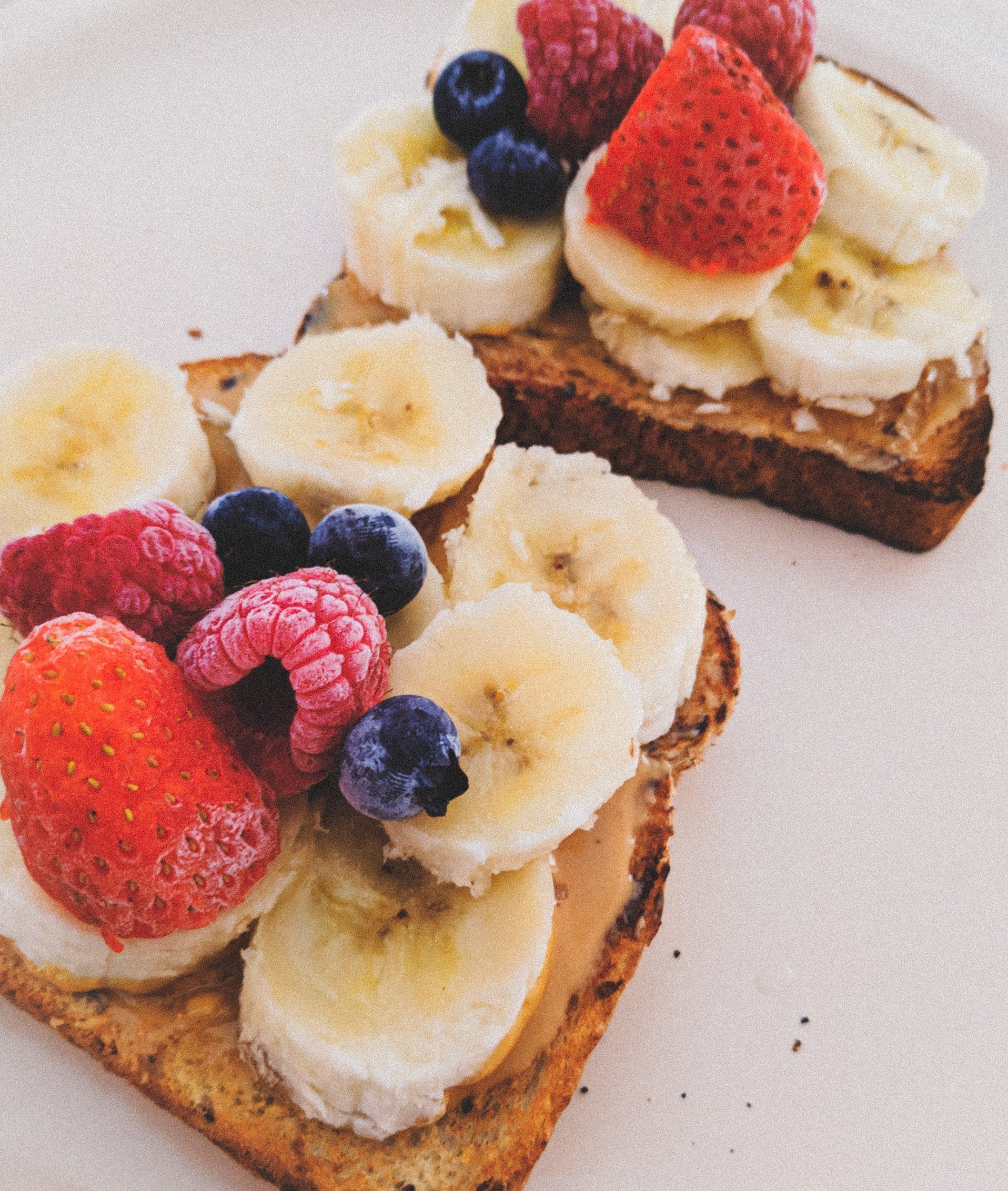
Whole grain toast with nut butter, cream cheese or butter
-
Cheese stick with whole grain crackers
-
Banana slices sprinkled with cinnamon
-
Hard boiled egg with sprinkle of salt
-
Oatmeal
-
Veggies with hummus
-
Smoothie with milk or yogurt, fruits like banana, kiwi, orange or pineapple, and/or nut butter
-
Cottage cheese with berries
-
Tart cherry juice or cup of milk
When you are incorporating a bedtime snack into your evening, here’s what your routine may look like:
-
Dinner time
-
Clean up and play time/ rough & tumble play/ family walk etc.
-
Bath time (some nights)
-
PJs & diaper or potty
-
Bedtime snack
-
Brush teeth
-
Books, telling stories, singing songs, or listening to audio books/ meditations etc.
-
Putting on sleep sack or getting into bed/ crib
-
Lights out and good night ritual
-
Supporting to sleep (laying with, rocking, nursing, cuddling, back rubs etc.) or leaving the room, whatever works for your family.
These things can really be in any order that work for you- that’s not super important! What is most important with a bedtime routine is that it’s pretty much the same every night, so it’s predictable. Toddlers LOVE predictability and knowing what comes next. You could even make them a little visual so they can see the whole routine (including the snack!) as you go through it.
You also want it to be a time of connection where you are tuned in and distraction free. We want to avoid joining our children in power struggles as much as possible, which is why offering the bedtime snack instead of fighting them on it can reduce a lot of stress.
If your toddler’s bedtime has turned into a negotiation every night, the Better Bedtimes Guide is your next step. It’s packed with practical, gentle strategies to create a smoother, more predictable evening routine—one that includes connection and boundaries, without power struggles. Grab the Better Bedtimes Guide here and start making bedtime feel easier—for both of you.
FAQs: Bedtime Snacks for Toddlers
Many parents wonder whether a bedtime snack helps toddlers sleep better — and if so, what to offer and when. These are some of the most common questions and practical answers to help you decide what works best for your family.
Does a bedtime snack help toddlers sleep better?
A small, balanced bedtime snack can help prevent hunger from interrupting sleep, especially if dinner was early or your toddler’s wake window is long. The goal is to choose something that satisfies without being overly sugary or heavy.
What are healthy bedtime snack ideas for toddlers?
Good options include a small portion of yogurt with fruit, whole‑grain cereal with milk, a banana with nut butter, applesauce, whole‑grain crackers with cheese, or a small handful of berries. These combine protein and complex carbs for sustained fullness.
How soon before bedtime should my toddler eat a snack?
Ideally aim for about **20–30 minutes** before bed so your child has time to digest and settle. Eating too close to lying down can lead to discomfort or restless sleep, while eating too early may not prevent hunger overnight.
Should bedtime snacks be sugary?
No — sugary snacks can spike energy and interfere with sleep onset. Choose snacks with a good mix of protein and complex carbohydrates, and avoid candy, cookies, juice, or sweetened yogurts close to bedtime.
Can a bedtime snack replace dinner?
Not usually. Bedtime snacks are meant to be small, supportive bites between dinner and sleep. They shouldn’t replace a balanced dinner that provides a range of nutrients your toddler needs for growth and development.
What if my toddler refuses a bedtime snack?
That can happen! Try offering the snack earlier, adjusting portion sizes, or choosing something your toddler enjoys but still nutritious. If they aren’t hungry close to bedtime, it’s okay to skip the snack and focus on a calm routine.
Can snacks help toddlers with early morning wakeups?
Sometimes. If your toddler consistently wakes very early and seems hungry, a small bedtime snack can help extend fullness through the early morning hours. Just watch portions so it doesn’t disrupt sleep onset.
Are bedtime snacks necessary for every toddler?
No. Some toddlers sleep through the night without needing a snack. Bedtime snacks are most helpful if hunger cues, hunger wakes, or long gaps between dinner and bedtime are contributing to sleep disruption.
Sources:
https://pubmed.ncbi.nlm.nih.gov/21669584/
https://www.ncbi.nlm.nih.gov/pmc/articles/PMC5409706/
https://www.ncbi.nlm.nih.gov/pmc/articles/PMC4440346/
Was this helpful? Save it for later!
binge reads
We think you'll love these
You deserve to the
baby stage, not just "survive it."
And you DON'T have to sacrifice your values, ignore your instincts, or force yourself to follow a method you don't align with just to get your baby back to sleep.
I’m here to help you create a restful, sustainable sleep environment that honors both your baby’s needs AND your own (without the stress OR the guilt!) because, no, you don’t have to choose between the two.
enjoy!
BABY SLEEP COURSES →
BABY SLEEP CONSULTS →
Wish you could help your baby sleep better without resorting to sleep training? Download my FREE guide to a good night’s sleep and learn 8 simple, science-backed tips for supporting your child’s needs.
Traditional sleep training methods don’t have to be your solution to better sleep.


SLEEP TRAINING ISN’T THE ONLY WAY TO GET GOOD SLEEP