the 8 month sleep regression
The 8 month sleep regression (or “progression as I like to call it!) can be one of the most trying times for parents in the first year of their baby’s life. The 8 month sleep progression is a period of development that can actually occur in the window between a child is 8 and 10 months old, and doesn’t just appear out of nowhere on the 8 month birthday. The 8 month progression is most infamous for wreaking havoc on sleep. Parents might notice their baby is up constantly at night and harder to put down for naps, almost like when they were a newborn (or worse!). So what’s actually going on?

This progression sometimes hits hard, but other times babies will sail through it without a blip. There’s no way to predict whether or not your baby’s sleep will go off the rails during this period. There is SO much going on for your baby during this time- They are going through lots of cognitive and physical changes!
There are a few main things going on with your baby at this age:
-
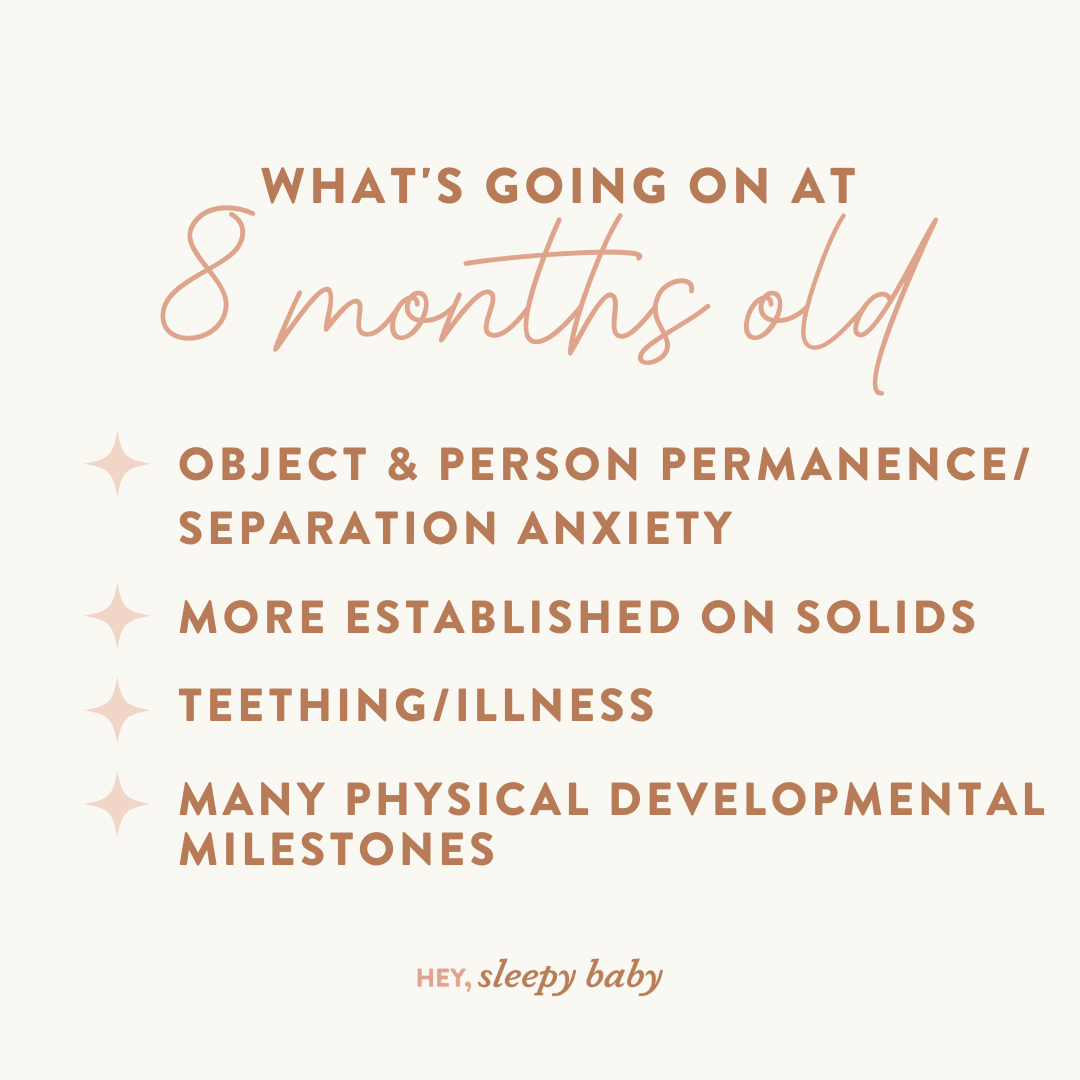
Object & Person Permanence/ Separation Anxiety: In a nutshell, object permanence means your baby understands that things they can’t see still exist even when they’re out of sight. The development of object permanence leads to other exciting developmental and cognitive milestones including memory development, pretend play, and exploration. Object permanence was thought by child psychologist Jean Piaget to set in around 7 months, but most researchers now agree that it sets in even earlier, though is still developing within the whole first year. Often babies in this stage become very upset when their parent leaves the room. This development links in with the formation of an attachment relationship. At about this same age, babies are recognizing that the person who cares for them most is central to their safety and security, and they may become upset when this important person leaves them.
-
Baby is more established on solids, eating more food, and could be dealing with digestive upset and/or mineral deficiencies. If your baby is screaming, kicking their legs a lot, having very fitful sleep, or otherwise showing signs of discomfort or physical symptoms (like rashes etc.) it would be good to rule out any iron deficiencies, food sensitivities or allergies.
-
Teething/ Illness: By this age, many babies will start teething if they haven’t already. I have a highlight in my IG profile all about teething! Many babies at this age are also out in the world more, maybe starting at daycare, etc. and will likely pick up the occasional cold, stomach bug, etc. It’s important to remember that our babies are human and if they aren’t feeling good they’ll need extra love and support, especially around sleep.
-
Developmental Milestones: In addition to massive cognitive growth during this time, your baby is likely working really hard on physical milestones. They have probably started crawling or scooting, are most likely sitting unassisted, and will likely begin trying to pull to stand, cruise, and maybe even take some steps. This is all major! Babies tend to want to practice these skills during sleep time, which can disrupt them (and you!). Plus, all this brain growth and the acquisition of new skills/ independence can make sleep tricky too.

What to do?
-
It’s important to remember to keep perspective during this time. Your baby is going through massive developmental change and all of these sleep interrupters are normal (though exhausting!). Do what you can to fill your cup, take care of yourself, and rest as much as possible. You cannot be a loving and responsive parent to your baby if you aren’t taking proper care of yourself, getting good nutrition, getting outside and moving your body daily, or if you have high stress.
-
Provide as much time as possible during the day for your little one to try out their new skills. This means lots of floor time, and as little time in containers as you can. Allow lots of free play so that baby can safely practice pulling up, cruising, etc.
-
Until your child has mastered the art of getting back down into his crib (either from a sitting or standing position), you might need to just gently lay your baby down and rub their tummy or back to encourage him to stay lying down on the mattress. You may have to support them back to sleep by rubbing their back or patting their butt if they roll onto their tummy and want to stay there.
-
If your baby is waking more frequently to feed and these wakes are following a predictable, consistent pattern, you might consider adding a dream feed. Choose the feed you’d like to work on (typically the first one is nice since it’s close to when you might go to bed) and offer baby the breast or bottle while they’re still asleep, then lay them back down (burping or holding upright first if needed). For example if your baby typically wakes around 10:00pm and is hungry, you could add the dream feed around 9:30 then go to bed yourself.. This can help break the wake/feed cycle and you might get a better stretch at the beginning of the night.
-
Ensure that your baby’s diet has plenty of iron-rich foods. Low iron is a very common deficiency, especially if you were low in iron or anemic in pregnancy. Baby’s natural iron stores start to deplete around 6 months, and there is research that shows correlation between low iron and poor night sleep cycles in babies and children.
-
By about 9 months, your baby is understanding that you are in relationship with each other. They are starting to figure our who is “in charge” and they want to be able to depend on you. It’s OK to set loving limits and hold boundaries as your baby gets older. Just like you’d say “NO” if your baby were doing something unsafe, if a pattern is no longer working for you, it’s more than reasonable to say no. For example if your 10-month old baby really wants you to rock them to sleep for 40 minutes but you’re only willing to do 15, you can set that boundary. If (when) they cry because this is a big change and tears are their way to express their sadness and frustration, you can empathize with them and support that emotion. For example “I know you love to rock. I’m going to rock you for a little while and then we are going to lay down for sleep. I can see that you’re upset. It’s ok to be upset, I love you.” This takes practice but it’s so good to lay the foundation of setting these loving limits before the toddler years! Read more about Loving Limits in this Blog Post.
To help with Separation Anxiety:
Separation anxiety occurs when a baby or toddler can’t see you and are worried about if and when you’ll return. What this means is that when you leave, your baby does not know that you are coming back. Separation anxiety occurs because between about 6-12 months, babies begin to learn object permanence, or the understanding that people and objects continue to exist even when out of sight. Even once babies have mastered object permanence through activities like hiding toys, because they do not yet have an understanding of time, they still do not know when their caregiver will come back if they’ve left. This causes them to become very upset.
Separation anxiety can start as early as 4-5 months, is most common between 9-18 months and usually eases up by age 3. Separation anxiety can cause disruptions in sleep as well as your day-to-day routine, and you might notice:
-
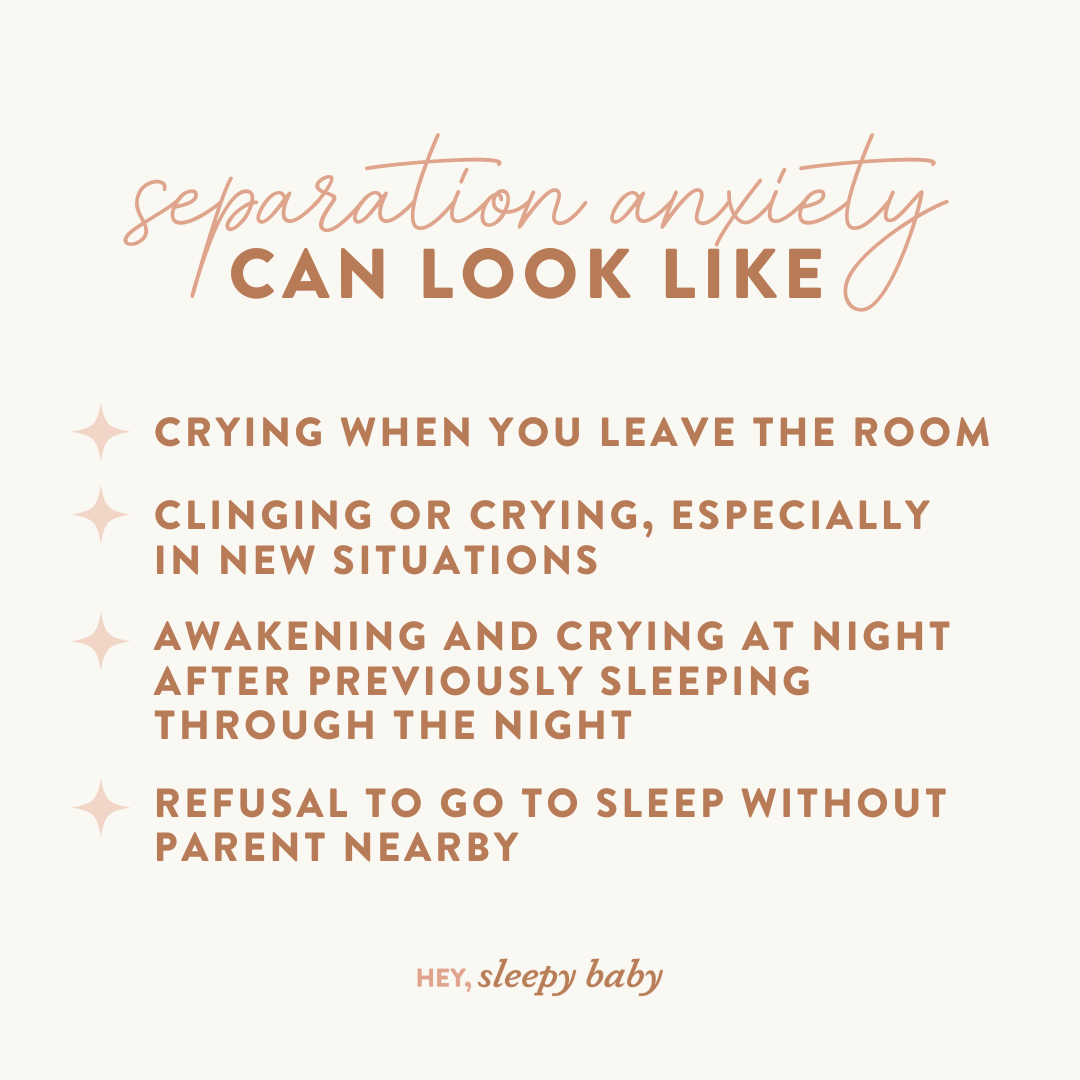
Crying when you leave the room
-
Clinging or crying, especially in new situations
-
Awakening and crying at night after previously sleeping through the night
-
Refusal to go to sleep without parent nearby
While separation anxiety is a very normal and natural phase of development, there are some things we can do to help:
-
Playing games like peek-a-boo, hide & seek, hiding items under blankets, etc., can help your child understand that things and people still exist even when out of sight
-
Let your baby know when you’re leaving the room, where you’re going, etc. They understand a lot more than you’d think!
-
When you do leave the room, say, to go to the bathroom, you can call to them or continue talking with them from the next room
-
Practice VERY short partings, like going out into the hallway and coming back immediately. You can increase the duration you’re gone over time (obviously with baby being supervised by someone else)
-
Before you part with baby to go to work etc., spend lots of 1:1 connecting time with limited distractions
-
When you leave, try to never sneak away- always say a quick & confident goodbye!
The 8-10 month sleep regression (or PROgression- as you now know, there’s so much growth happening for your baby!) can be really tough on babies AND parents. Remember that if it persists for more than a few weeks or you know in your gut something else is up, reach out to a trusted healthcare provider or book a consultation with us so we can help you get to the bottom of your sleep troubles!
Some baby sleep issues are red flags worth investigating. Download my FREE advocacy guide and learn how to spot possible medical red flags, track symptoms, and talk to your child’s healthcare provider with clarity and confidence.
FAQs: 8‑Month Sleep Regression — What to Know & What to Do
Many parents notice sleep disruptions around 7–9 months — sometimes called the “8‑month sleep regression.” These FAQs answer the most common questions about what it is, why it happens, how long it lasts, and what you can do to support your baby’s sleep through it.
What is the 8‑month sleep regression?
The 8‑month sleep regression is a period when a baby’s sleep seems to fall apart — with more frequent night wakings, shorter naps, harder bedtimes, or resistance — usually around 7–9 months. It’s linked to major developmental changes in how sleep cycles work and what babies are learning about the world.
Why does sleep get disrupted around 8 months?
At this age, babies are mastering new physical and cognitive skills (rolling, sitting, crawling), developing object permanence, and reorganizing their sleep architecture. These changes can temporarily make it harder for them to fall asleep easily or stay asleep consistently.
What are common signs of the 8‑month sleep regression?
Typical signs include increased night wakings, shorter naps, longer time to fall asleep, early morning waking, fussiness around sleep times, and disrupted sleep patterns compared to earlier months.
How long does the 8‑month sleep regression last?
Most babies move through this transition in about **2–6 weeks**, though every baby is different. Some show sleep changes for only a few days, while others take a couple of weeks for sleep to feel more predictable again.
Does the 8‑month sleep regression mean something is wrong?
No — it’s a **normal developmental shift** in how babies’ brains and sleep systems are maturing. Although it feels like a regression, it’s part of normal sleep progression as sleep cycles extend and consolidate.
What can I do to support my baby during the 8‑month sleep regression?
Helpful steps include keeping consistent bedtime and nap routines, watching for sleepy cues, maintaining age‑appropriate wake windows, offering calm comforting cues, and keeping the sleep environment soothing and predictable.
Should I change my baby’s schedule during this time?
Small schedule tweaks (like adjusting nap timing or moving bedtime slightly earlier) based on your baby’s sleepiness signals can help, but major overhauls usually aren’t necessary and can add stress to the process.
When should I talk to a doctor about my baby’s sleep?
If sleep disturbances are persistent beyond a few months, accompanied by concerning symptoms (such as poor weight gain, breathing issues, pain, or extreme distress), or are significantly affecting daily functioning, it’s a good idea to consult your pediatrician.
was this helpful? save it for later!
binge reads
We think you'll love these


You deserve to the
baby stage, not just "survive it."
And you DON'T have to sacrifice your values, ignore your instincts, or force yourself to follow a method you don't align with just to get your baby back to sleep.
I’m here to help you create a restful, sustainable sleep environment that honors both your baby’s needs AND your own (without the stress OR the guilt!) because, no, you don’t have to choose between the two.
enjoy!
BABY SLEEP COURSES →
BABY SLEEP CONSULTS →
Wish you could help your baby sleep better without resorting to sleep training? Download my FREE guide to a good night’s sleep and learn 8 simple, science-backed tips for supporting your child’s needs.
Traditional sleep training methods don’t have to be your solution to better sleep.


SLEEP TRAINING ISN’T THE ONLY WAY TO GET GOOD SLEEP